
For nerve pain in particular, identifying the cause is essential. A programme that feels soothing is valuable only if it does not delay care for a compressed nerve, inflammatory arthritis, infection, diabetes complication, or another condition that needs specific treatment.
For osteoarthritis—especially knee osteoarthritis, often correlated in Ayurveda with Janu Sandhigata Vata—the Panchakarma procedures most commonly used are oleation, therapeutic heat/sudation, and medicated enema therapy. Local knee treatments such as Janu Basti are also widely used, though they are better considered supportive external Ayurvedic therapies rather than one of the five core Panchakarma actions.
Common Procedures
|
Procedure |
What it involves |
Typical role in osteoarthritis care |
|
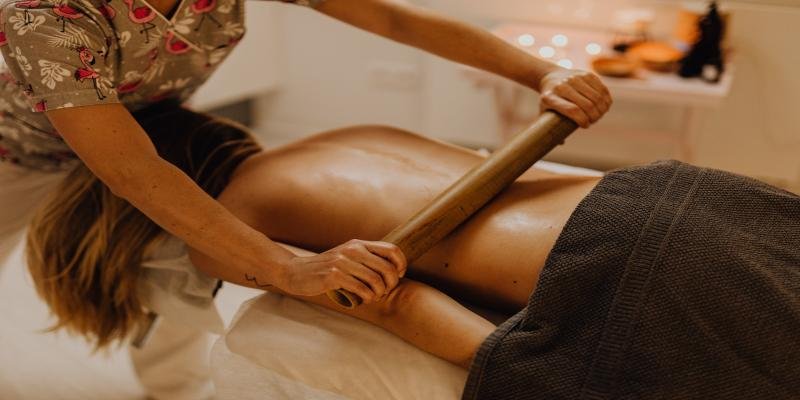
Snehana / Abhyanga |
Application of oil, often as a massage using a selected medicated oil |
Used to reduce the subjective feeling of dryness, tightness, and stiffness; usually a preparatory therapy before heat treatment |
|
Swedana / Svedana |
Controlled heat or sudation after oil application; may include steam, bolus fomentation, or local heat |
Often used for muscular tightness and temporary stiffness around the knee, hip, back, or other affected joint |
|
Patra Pinda Sweda |
Warm herbal-leaf boluses are applied rhythmically over the painful area |
A localized form of sudation commonly used when knee pain is associated with stiffness and surrounding muscle spasm |
|
Basti |
Medicated enema therapy; may use oil, herbal decoction, or a planned combination |
This is a core Panchakarma procedure and is traditionally emphasized for vata-dominant musculoskeletal conditions |
|
Matra Basti / Anuvasana Basti |
A smaller-volume oil-based enema, generally intended to be gentler than cleansing enemas |
Commonly selected in Ayurvedic practice for chronic pain, dryness, stiffness, and older or physically weaker patients |
|
Niruha / Asthapana Basti |
A decoction-based medicated enema, sometimes used in a planned course with oil-based basti |
May be used in selected patients as part of a broader Panchakarma programme; requires clinical supervision |
|
Virechana |
Therapeutic purgation, usually after preparatory oleation and heat therapy |
Used less universally for uncomplicated osteoarthritis; an Ayurvedic clinician may consider it when digestive, metabolic, or inflammatory features are thought to be relevant |
|
Janu Basti |
A ring of dough is placed around the knee and filled with comfortably warm medicated oil for a set time |
A popular local knee treatment for pain and stiffness; despite its name, it is not the same as rectal basti and is not one of the classical five main Panchakarma procedures |
|
Upanaha |
A warm herbal poultice or paste is applied and covered over the joint |
A supportive local therapy for stiffness and pain; it is not a core Panchakarma procedure |
|
Pizhichil / Dhara |
Continuous pouring of warm medicated oil over the body or a region, often with massage |
May be used when widespread stiffness, fatigue, or multiple painful joints are present; it is an adjunctive treatment rather than core Panchakarma |
Most Relevant Core Treatments
For a person with stable, chronic knee osteoarthritis, the approach often centres on three elements:
A 2023 systematic review of randomized comparative trials found that sudation techniques and enema therapy, used alone or as part of multimodal Ayurvedic care, showed possible benefit for knee osteoarthritis. However, the review included only 10 eligible trials, only three reported safety concerns, and better long-term research is needed.
Important Distinction
Not every Ayurvedic procedure used for osteoarthritis is technically Panchakarma.
For uncomplicated osteoarthritis, induced vomiting (vamana) and nasal therapy (nasya) are not usually the central treatments. A full “detox” programme is also not automatically appropriate simply because someone has joint pain.
Safety Considerations
Osteoarthritis should first be distinguished from rheumatoid arthritis, gout, infection, fracture, meniscal injury, or a painful joint caused by another condition. A medical evaluation is especially important if there is marked redness or heat in the joint, fever, sudden swelling, inability to bear weight, rapidly worsening pain, or unexplained weight loss.
Panchakarma should be tailored by a properly qualified Ayurvedic physician, particularly for older adults and people with diabetes, kidney disease, heart disease, bowel disorders, dehydration, anemia, or those using blood thinners. Strong purgation and enema therapies should not be self-administered. Any oral Ayurvedic medicine should be obtained from a reputable, regulated source because some Ayurvedic preparations have been found to contain potentially toxic metals.
Practical Perspective
For knee osteoarthritis, the most reasonable integrative use is usually not an intensive cleanse. It is a supervised plan combining local oil/heat therapies for comfort with evidence-based measures that protect function: strengthening of the quadriceps and hip muscles, regular low-impact activity, weight management when relevant, sleep support, and clinician-guided pain treatment.
Panchakarma-based care may help some people with pain and stiffness, but it has not been proven to regenerate damaged cartilage or reverse osteoarthritis.